
Resting Heart Rate: Your Heart’s Simple Secret to Better Health

Ever wonder what your heart is doing when you’re just relaxing? Your resting heart rate (RHR) is more than just a number. It’s a simple, powerful tool that tells you a lot about your health, fitness, and even how stressed you are.
It’s one of the best health metrics you can track easily!
What is Resting Heart Rate (RHR)?
Your resting heart rate is how many times your heart beats in one minute when your body is completely calm. This means you haven’t been active, aren’t feeling stressed, and have been sitting or lying down quietly for at least 10-15 minutes.
For most adults, a normal resting heart rate is between 60 and 100 beats per minute (bpm). But this can change depending on your age, how fit you are, and other things.
Why Your RHR is a Key Health Metric
Your resting heart rate is a super important health number for a few big reasons:
1. It Shows Your Heart’s Health
A lower resting heart rate often means your heart is strong and works well. A fit heart doesn’t have to pump as hard to send blood around your body. On the other hand, a high resting heart rate could mean your heart is working too hard. This might point to heart problems or a higher risk of heart disease.
2. It Reflects Your Fitness Level
In general, the fitter you are, the lower your resting heart rate will be. Athletes often have RHRs in the 40s or 50s! Regular exercise, like walking fast or running, makes your heart stronger. This allows it to pump more blood with each beat, so it needs fewer beats when you’re at rest. Watching your RHR is a great way to see your fitness progress.
3. It Reveals Stress and Recovery
Your RHR can also show how stressed your body is and how well you’re recovering. When you’re very stressed (from emotions or hard exercise), your RHR might go up. Also, if you haven’t fully recovered from a tough workout or are getting sick, your RHR might be higher than usual. Noticing these changes can help you know when to rest or change your routine.
4. It’s Easy to Measure
You don’t need fancy tools to measure your RHR. All you need is a watch with a second hand or your phone’s timer. Just find your pulse on your wrist or neck, count the beats for 15 seconds, and then multiply by four. It’s that simple! Many smartwatches and fitness trackers can also check your RHR automatically, giving you consistent data.
5. It Helps You Manage Your Health
Keeping an eye on your RHR regularly helps you spot changes early. If your RHR suddenly or steadily goes up without a clear reason, it could be a sign to talk to your doctor. This allows you to be more active in looking after your own health.
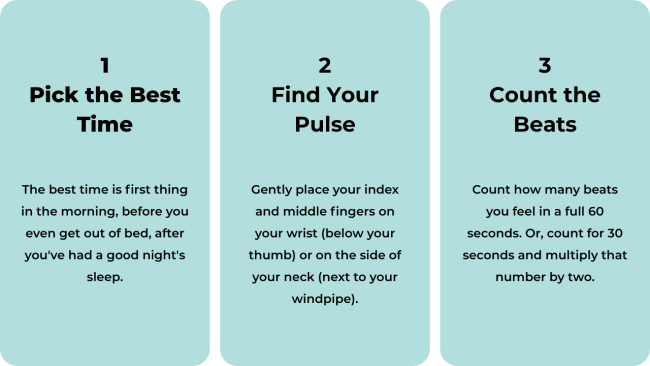
How to Measure Your Resting Heart Rate (The Right Way!)
Want to check your resting heart rate? Here’s how:
What’s a “Good” Resting Heart Rate?
While 60-100 bpm is average, a lower RHR is generally better:
- Excellent: 40-59 bpm (often seen in very fit people)
- Good: 60-69 bpm
- Average: 70-79 bpm
- Needs Improvement: 80-100 bpm
If your resting heart rate is always above 100 bpm or below 60 bpm (and you’re not an athlete), it’s a good idea to talk to your doctor.
How to Improve Your Resting Heart Rate
The good news is you can often make your RHR better! Here are some simple ways:
- Exercise Regularly: Aim for at least 150 minutes of moderate exercise (like brisk walking) or 75 minutes of strong exercise (like running) each week.

- Manage Stress: Try ways to lower stress, such as meditation, yoga, deep breathing, or spending time outside.

- Keep a Healthy Weight: Carrying extra weight makes your heart work harder.

- Get Enough Sleep: Good sleep is super important for your body to recover and for a healthy heart.

- Don’t Smoke: Smoking makes your RHR higher and really harms your heart.

- Limit Caffeine and Alcohol: Too much of these can temporarily raise your heart rate.

The Bottom Line: Listen to Your Heart
Your resting heart rate is a simple, yet incredibly powerful message from your body. By understanding and regularly tracking it, you gain valuable insights into your heart health, fitness, and overall well-being. It empowers you to make small, positive changes that can lead to big health benefits.
So, take a moment to listen to what your heart is telling you. Start tracking your RHR today – it’s a smart step towards a healthier, happier you!